Case study
A shared workflow for production specifications
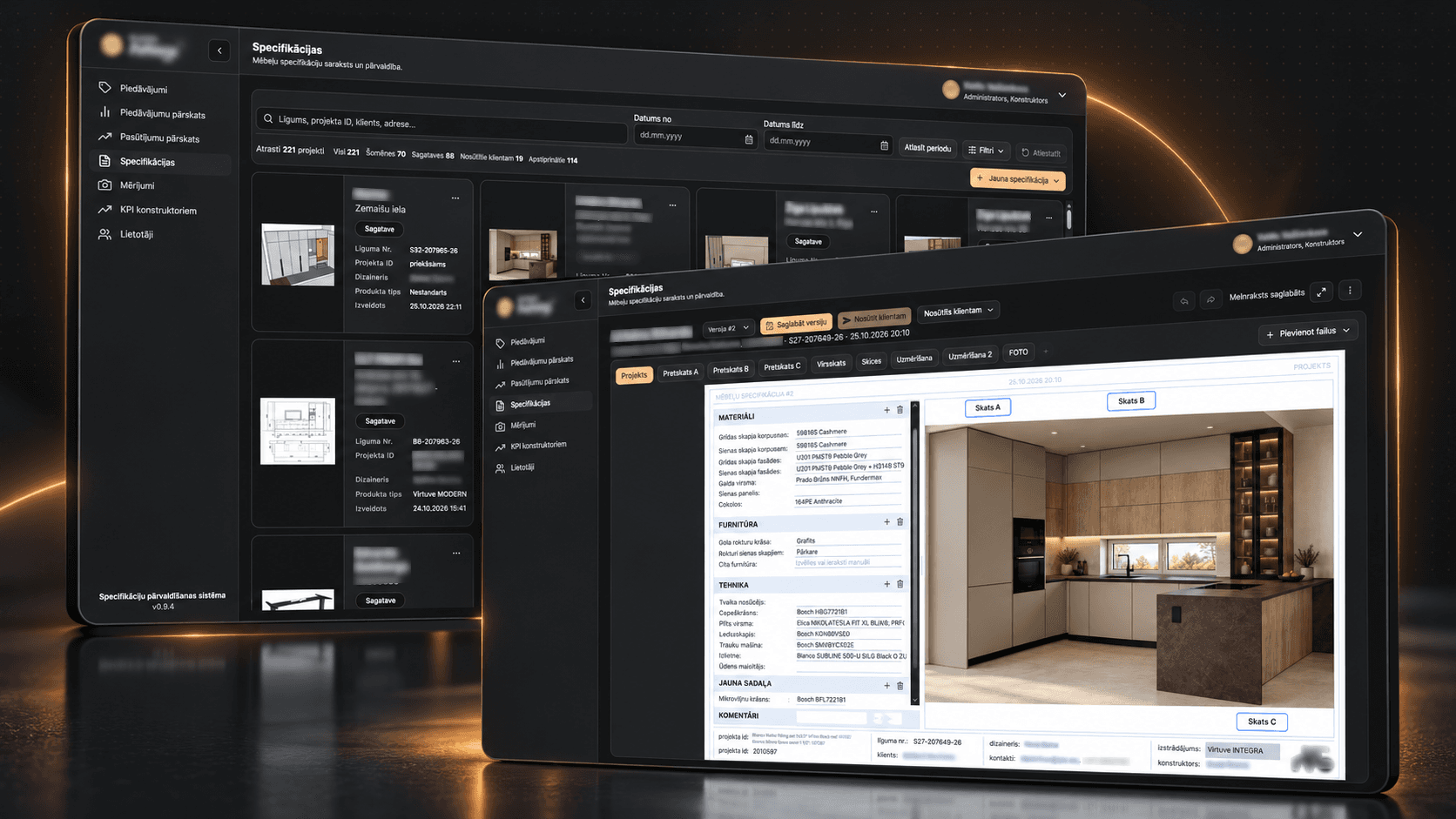
I built an internal Next.js system for designers and design engineers at a manufacturing company. It brings specifications, drawings, statuses and project versions into one shared workflow.
Started during my software engineering internship, the project continued after the internship ended. It is now in use, with further development guided by production needs and feedback from the team.
The first usable prototype was ready within five days, working in sessions rather than full-time.
The challenge
Understanding the process and connecting its data
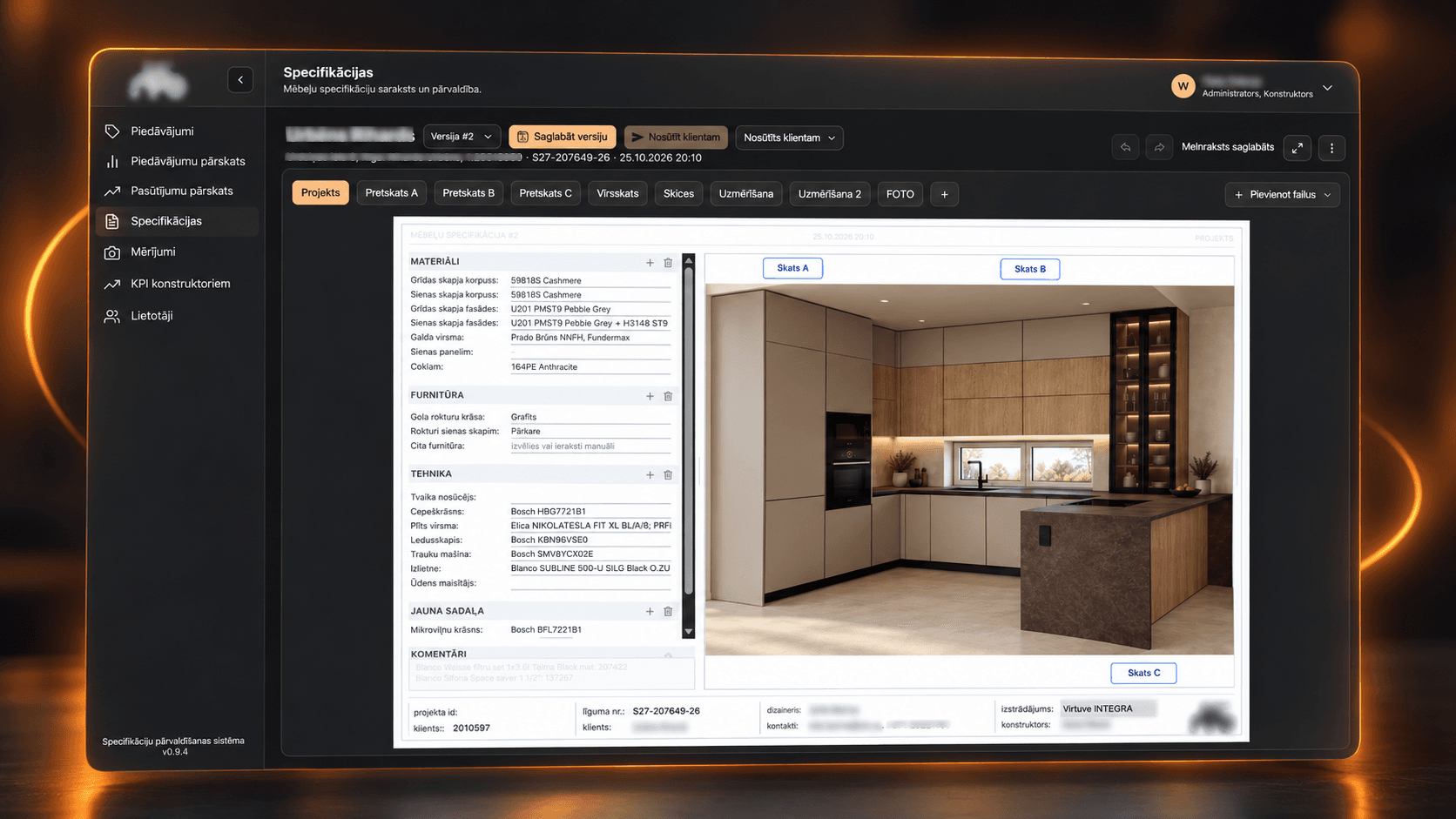
Production specifications connect product information, materials, components and manufacturing requirements. I needed to understand the team's process and model those relationships in a form people could use every day.
Obtaining and linking the required data took most of the initial development effort. The challenge was making that information consistent and usable across the workflow.
Problem
- Specifications were stored in individual designers' local folders.
- The team had no shared view of the order flow.
- Project versions lacked a controlled management process.
- Finding current information depended on separate files and individual knowledge.
The aim was a shared production workflow that people could use and maintain every day.
Solution
From a usable prototype to a working internal tool
The first prototype supported complete specification creation, drawing image attachments and status changes.
The system now also includes controlled project versions and visibility over order flow. Requirements came from real production work, and features were tested with users as the system evolved.
Results
Shared information and controlled project versions
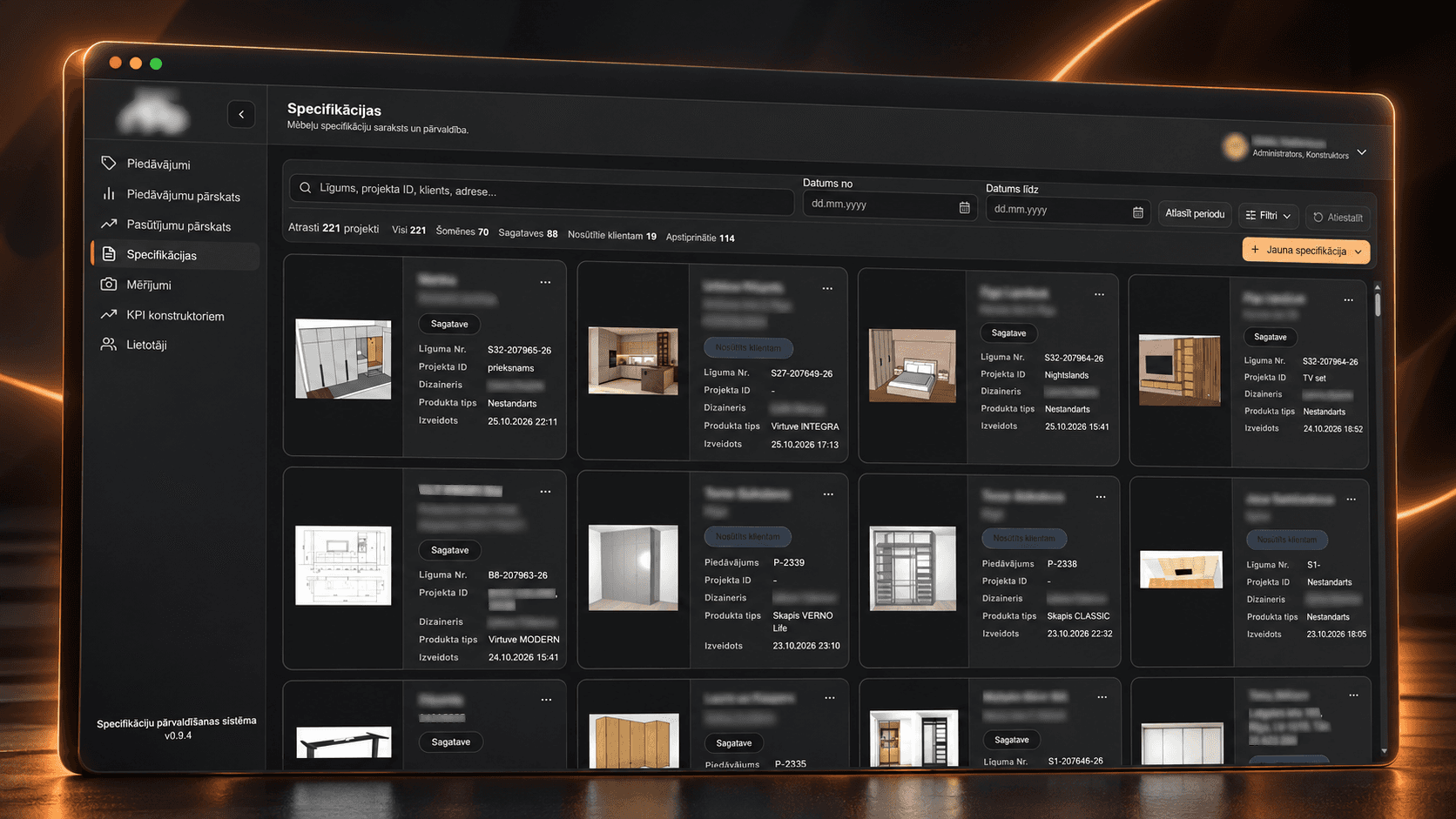
Designers and design engineers now share specifications, follow order flow and manage project versions in one system. Current project information is accessible to the team through a shared process.
The system also became the foundation for the Orders & Quotations Dashboard, which connects ERP data for operational reporting.
My role & implementation
Built end-to-end as the sole developer
I designed the application architecture, modelled the data, handled retrieval and integration, and developed the system end to end.
AI tools accelerated parts of the implementation. Architecture, integration decisions, validation and final delivery remained my responsibility.
Built with Next.js, the application runs on the company's local server, with access through the company VPN.
Project scope
Business process analysis, requirements gathering, workflow design, data modelling, UI development, database logic and user testing, followed by ongoing development as production needs evolve.